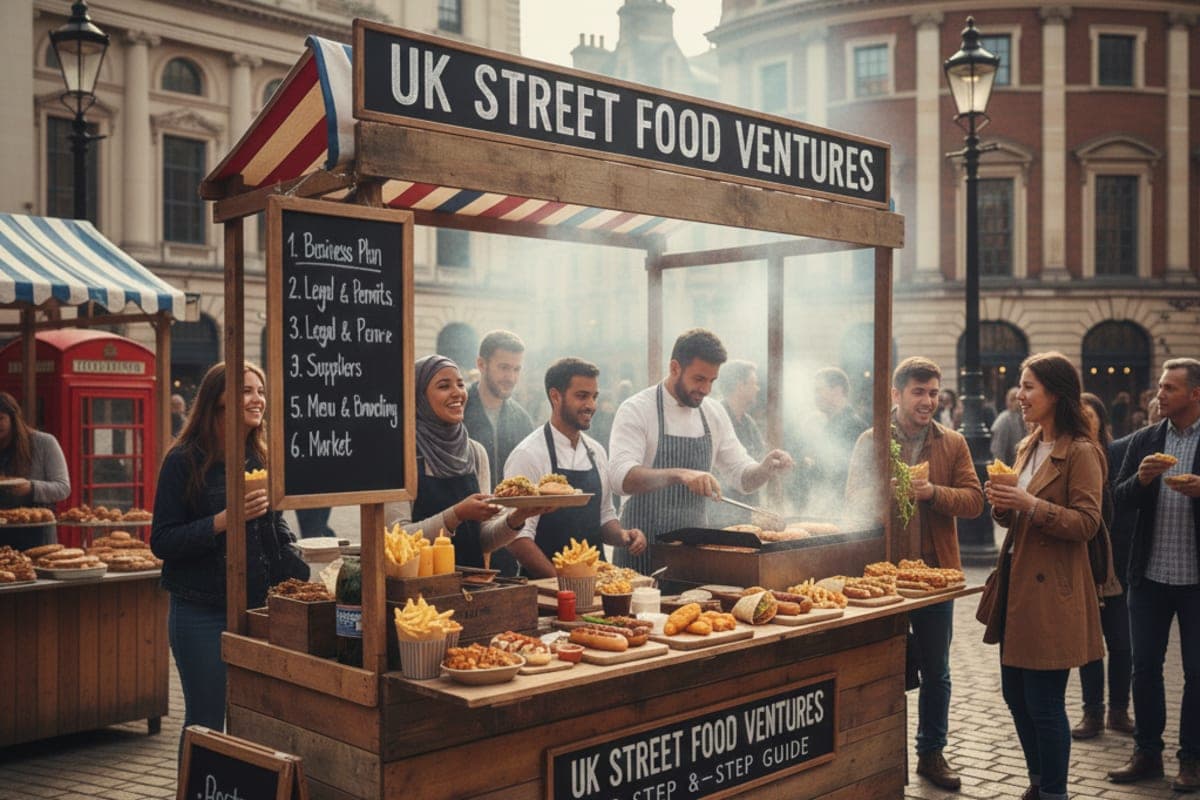
Starting a street food business in the UK is one of the most popular ways to enter the hospitality world with relatively low costs and maximum flexibility. This guide explains, in detail, how to turn your idea into a real street food brand, from legal steps and licences to costs, equipment, and finding your first pitches.
Defining your concept
The first step is to decide exactly what you will sell and who you want to serve. A clear concept makes it easier to brand your stall, calculate costs, and stand out in crowded markets.
Choose a focused menu of a few dishes rather than a very long list; this keeps preparation simple and service fast.
Think about your target customer: office workers at lunch, evening bar crowds, families at weekend markets, or festival visitors.
Decide your “hook”: for example, regional Turkish street food, vegan comfort food, gourmet burgers, loaded fries, or dessert‑only.
Check what already exists in your area by visiting local markets and street food events so you can offer something different instead of copying others.
Legal registration and food safety
Before selling a single portion, you must be properly registered as a food business and able to prove that you operate safely. These are legal requirements, not optional extras.
Register your food business with the local council at the address where you prepare food (home kitchen, shared kitchen, or commercial unit). Registration is free but must be done at least 28 days before trading.
Complete a basic food hygiene training course (usually “Level 2 Food Safety & Hygiene for Catering”) and keep the certificate to show to inspectors and event organisers.
Set up a food safety management system (for example based on HACCP principles): write down how you store, cook, cool, transport, and serve food safely.
Learn allergen rules and keep a clear allergen chart for every dish, including any “may contain” risks, so you can answer customer questions confidently.
Licences, permissions and paperwork
Street food trading in the UK is highly regulated and rules can vary between councils. You need to understand where you can trade and what permission is needed for each location.
If you want to trade on public streets or in certain outdoor spaces, you will usually need a street trading licence from the council; each council has its own application form, fees, and allowed locations.
Markets, food halls and organised events often require you to apply for a stall or pitch separately; they may ask for your hygiene rating, insurance documents, menu and photos.
Trading on private land (brewery yards, car parks, industrial estates, farm shops) normally requires written permission from the landowner; some councils also require a consent licence if it is near the highway.
Keep digital copies of all documents (registration letter, certificates, insurance, gas/electric tests) ready, because event organisers will ask for them frequently.
Equipment, vehicle and setup
Your physical setup is one of your biggest costs and will shape how and where you can trade. You do not have to start with a full food truck; many successful vendors begin with a gazebo stall.
Decide on your format :
Gazebo stall with tables and portable equipment (cheapest and flexible for markets and events).
Catering trailer to tow behind a vehicle.
Full food truck or van conversion for maximum mobility and branding.
List your essential equipment based on your menu: grills, fryers, hot plates, fridges, cold boxes, prep tables, sinks, storage boxes, serving containers, and POS system.
Do not forget invisible items like fire extinguishers, first‑aid kit, hand‑wash facilities, waste bins and cleaning chemicals; these are checked during inspections and by event organisers.
Start with strong, weather‑resistant kit and a professional‑looking setup (banners, menu boards, branded gazebo valance), because appearance strongly affects customer trust and sales.
Budgeting and costs
Even a small street food business has real start‑up and running costs. A realistic budget helps you avoid surprises and price your food correctly.
Initial costs may include: vehicle or trailer, gazebo, equipment, branding, first stock, training, licences, and deposits for events.
Ongoing costs include: ingredients, fuel or electricity, pitch fees, insurance, maintenance, packaging, card payment fees, and possibly staff wages.
Work out cost per portion carefully: include all ingredients, packaging and a share of overheads (fuel, pitch, insurance) so you can set a selling price that gives you a healthy margin.
Keep your menu engineered around profit: a mix of “hero” dishes that attract people and simpler, high‑margin items that support your overall earnings.
Branding, marketing and online presence
In a crowded street food scene, strong branding and good marketing can be as important as flavour. Customers should be able to recognise you instantly and find you online.
Choose a memorable business name and create a simple visual identity: logo, colours, fonts and a few key phrases that describe your food and story.
Set up social media profiles (Instagram, TikTok, Facebook) and post regularly: behind‑the‑scenes prep, market days, new dishes, customer reactions and upcoming dates.
Create a basic website or landing page listing your menu, photos, story, and how to book you for private events or catering.
Encourage reviews on platforms like Google and social media by politely asking happy customers to share their experience and tag your account.
Finding pitches and building experience
The first markets and events you attend will teach you more than any online guide. Aim to gain experience in different types of locations and times of day.
Start with local markets, community events, brewery taprooms, or street food collectives; these are often more affordable and supportive for new traders.
Test weekdays and weekends, lunch and evening slots, to see when your concept works best; for example, office areas at lunch versus nightlife zones in the evening.
Keep records of each event: footfall, sales, weather, type of crowd, and organiser quality; use this data to decide which events are worth attending again.
Be reliable and professional with organisers and neighbouring traders; a good reputation leads to invitations to better events and festivals.
Scaling up and long‑term plans
Once your concept is proven and you have steady bookings, you can start thinking about growth. Scaling does not have to mean a big restaurant; there are many options.
Improve efficiency by refining your menu, speeding up prep, and organising your workspace to serve more people per hour.
Add more trading days, hire part‑time staff, or invest in a second setup if demand is high and you can maintain quality.
Consider long‑term moves such as a permanent stall in a food hall, a dark kitchen for delivery, or eventually a small restaurant, using your street food brand as the foundation.
Regularly review your finances, customer feedback and lifestyle: growth should support your goals, not create constant stress and burnout.


